
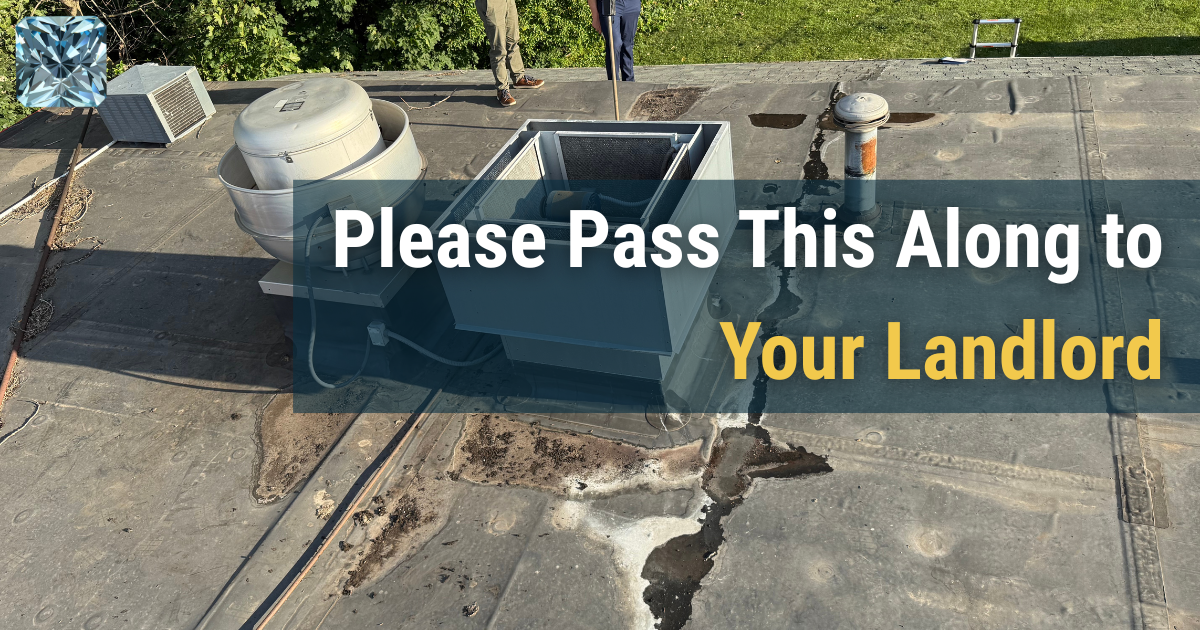
Please Pass This Along to Your Landlord
They've had the same insurance agent, the same blacktop guy, the same electrician, and the same roofer for 20 years, and loyalty is a virtue, until it costs them their building. The rubber is faded. The plastic is antiquated. And if their roofer isn't telling them about what's new, it's because he's not telling them.
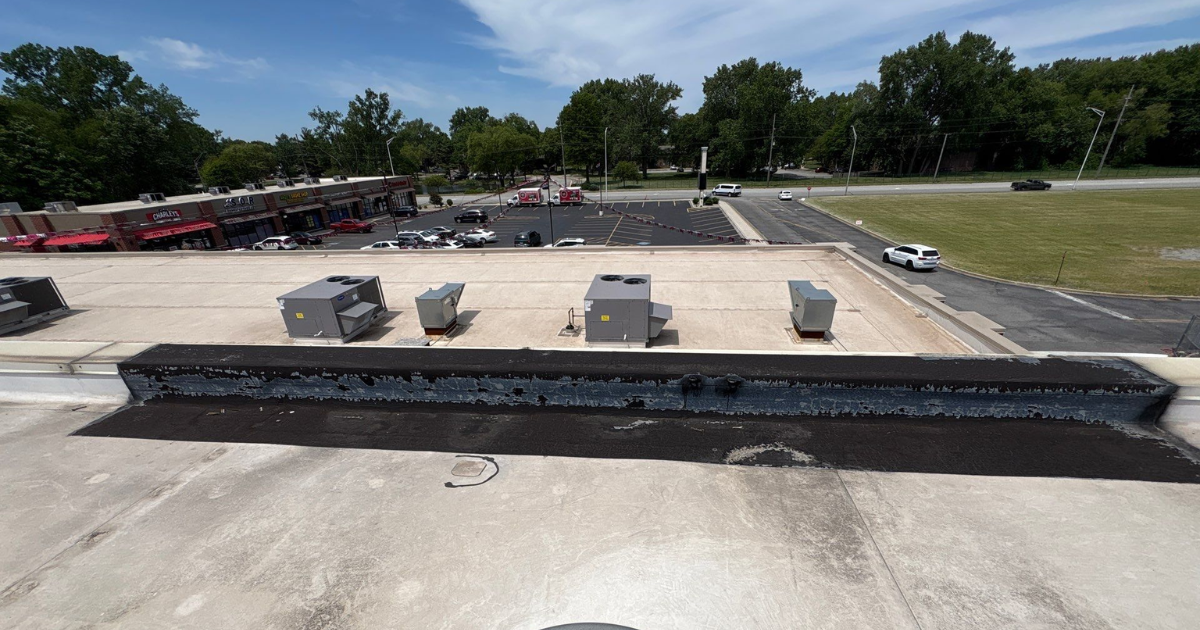
🔲 Loyalty is a virtue, until the vendor stops keeping up with what's new.
🔲 Rubber roofs (EPDM) and plastic roofs (TPO) are not bad, they're just yesterday's answer to today's building.
🔲 Most landlords haven't received a real roof second opinion in over a decade, and most are paying for it without knowing.
🔲 Liquid-applied coatings are cheaper than tear-offs, last longer than patches, and most roofers won't mention them.
🔲 A second opinion costs nothing. A bad roof costs everything.
DO NOT SCROLL UNLESS CURIOUS
If you're a tenant reading this, you probably aren't the one paying for the roof. But you're the one who notices when it leaks.
If you're the landlord, first, thank you for clicking. You manage more buildings than most people will own in a lifetime. You've been loyal to good people. That loyalty has served you well.
This is not a sales pitch. This is a second opinion you didn't ask for, written respectfully, because somebody had to say it.
Keep reading.
Three roads. One is paved. Two end in a tear-off.
A second opinion costs nothing. A bad roof costs everything.
"Loyalty is a Virtue"
The same insurance agent. The same blacktop guy. The same roofer.
Most landlords we meet have used the same handful of vendors for fifteen, twenty, sometimes thirty years.
That is admirable. It is also expensive.
These are, by and large, the good landlords. They pay their invoices on time. They treat their contractors with respect. They don't switch every time someone undercuts the bid by five percent. When their roofer shows up, coffee is ready. When the electrician has a slow month, they find a reason to call him. This kind of loyalty built Northwest Indiana. It still runs the place.
But there is a quiet cost that loyalty rarely advertises. When a contractor knows the business is locked in, not because of fear, but because of genuine goodwill, the pressure to sharpen diminishes. Slowly. Gently. Nobody means for it to happen. The roofer who has been on the same flat roof every spring for a decade is not attending trade conferences. He is not researching what Conklin has developed in the last five years. He is doing what he has always done, because it has always been good enough, and because his customer has never asked for more.
Nobody is the villain here. The roofer is doing what he was taught. The landlord is honoring a relationship that has served him well. The problem is simply that the world moved, and nobody sent a memo.

"The World Moved and Nobody Sent a Memo"
Rubber is faded. Plastic is antiquated. What replaced them?
EPDM, the black rubber membrane you see on most commercial flat roofs in this region, dominated the market from the 1970s through the 1990s. It was durable, relatively affordable, and a genuine improvement over what came before it. If your building went up before 2000 and the roof has never been replaced, there is a reasonable chance you are still living with the answer to a question that was asked fifty years ago.
TPO came next. The plastic membrane, usually white, usually heat-welded, swept through the commercial roofing market in the early 2000s, sold largely on energy efficiency and price. It was the upgrade. And for a time, it was. Early TPO formulations, however, had cracking problems that the industry spent years trying to solve. Some of those roofs are now well past their designed service life, sitting on buildings in Munster, Merrillville, and Crown Point, doing their best.
Both of these systems were the right answer once. They are not the wrong answer now, but they are no longer the only answer, and in many cases, they are no longer the best one.
Liquid-applied coating systems answer the question that is actually being asked today, How do I extend the life of what is already up there, without a tear-off, without the landfill cost, and without the disruption? The system goes on over the existing membrane, base coat, reinforcement mesh, top coat, seamless from edge to edge, certified by the manufacturer, and warrantied for years. No dumpster. No tarps over the tenant's equipment. No week-long project that shuts down the loading dock.
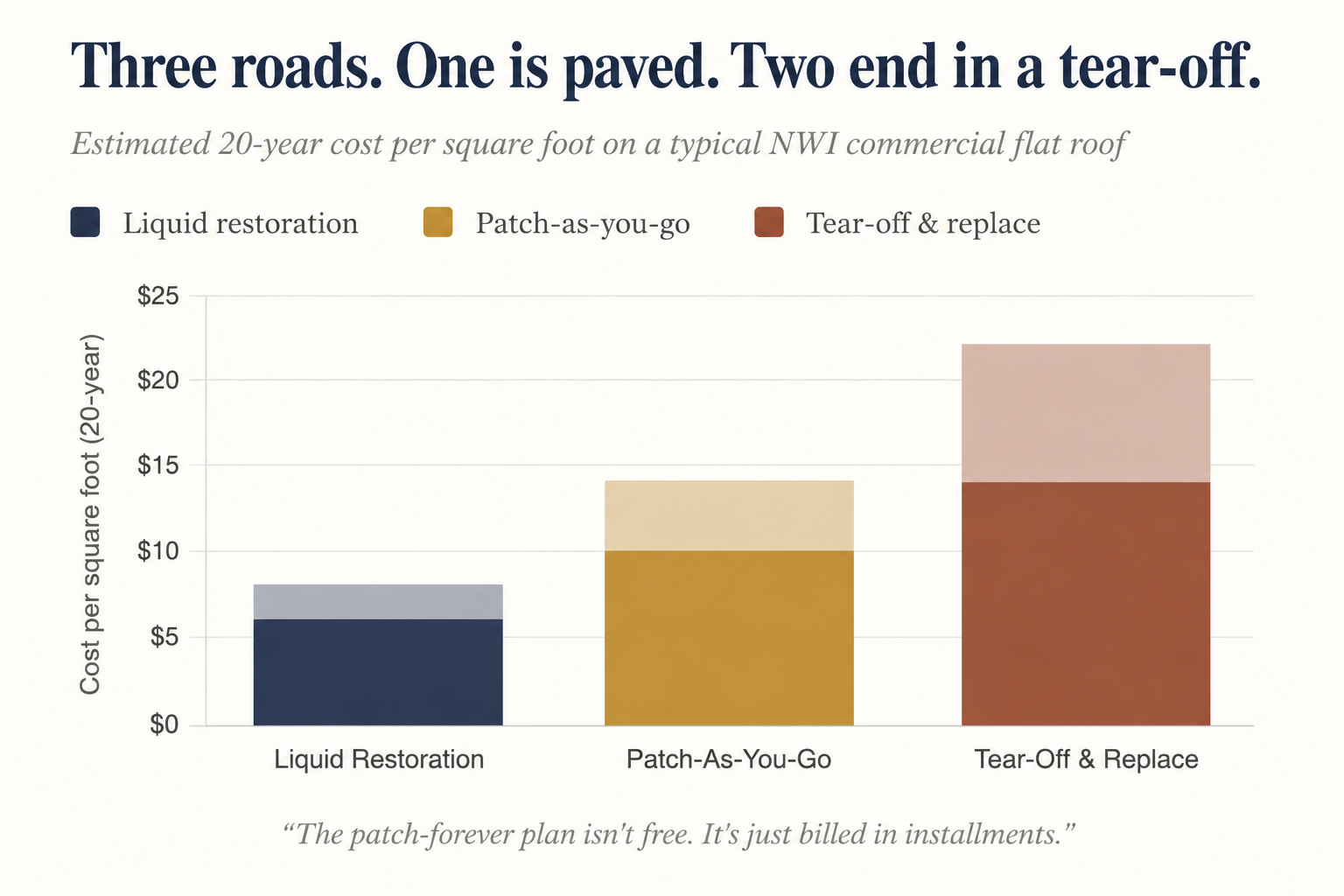
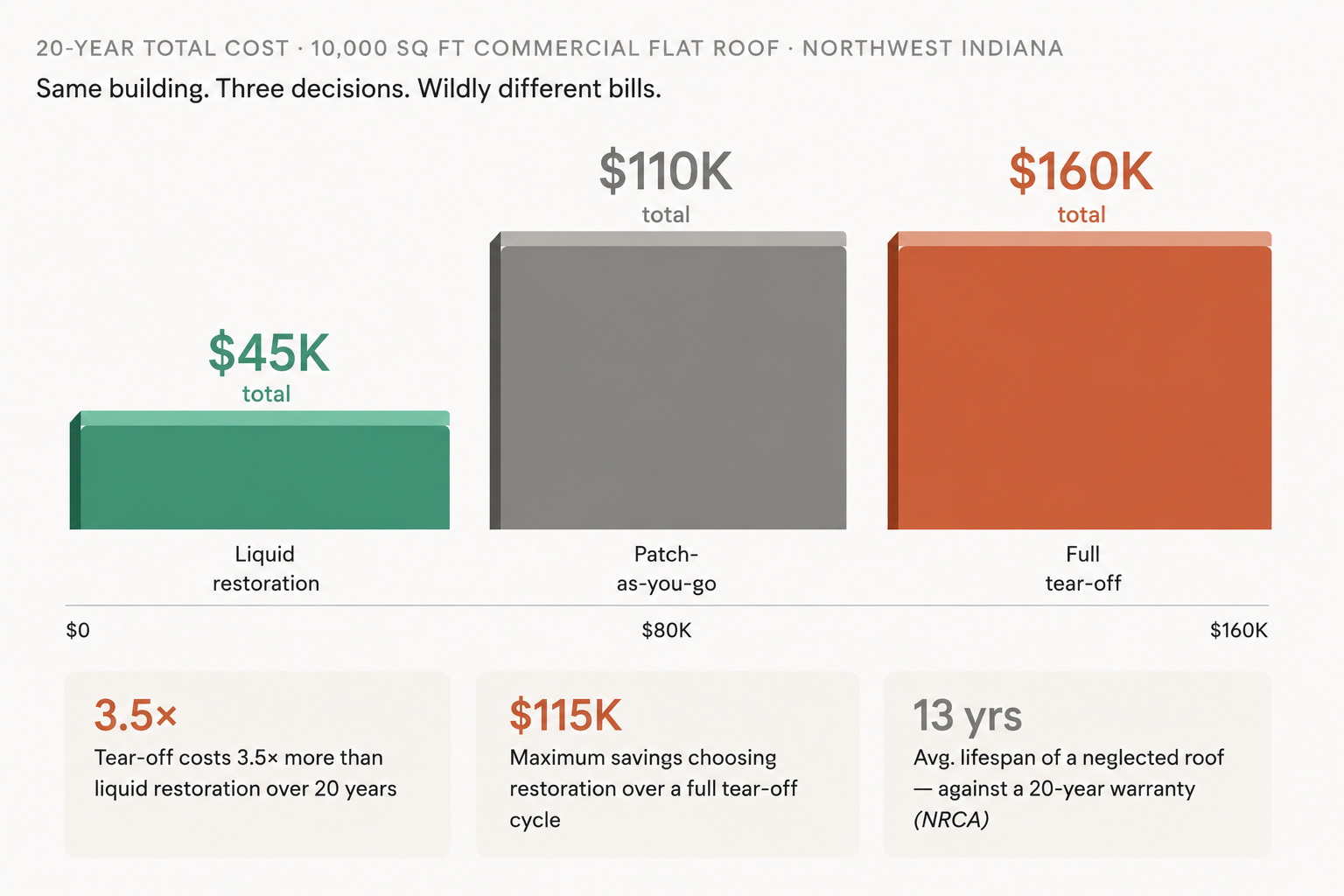
On a 10,000 square foot building, common in industrial NWI, the difference between a liquid restoration and a full tear-off can run $60,000 to $130,000 over the life of the roof. That is not a rounding error. That is a mortgage payment. That is a renovation. That is several years of property tax.
"Why Isn't Your Roofer Telling You?"
It's not malice. It's incentives.
If your roofer has been quoting tear-offs since the Berlin Wall came down, it might be time for a second opinion. Loyalty got us all into VHS players too. Eventually somebody had to say something.
If your current roofer is not mentioning liquid-applied coatings, it is not because he is trying to cheat you. It is almost certainly because he is not certified to install them.
Conklin and similar systems require contractor certification, training, and specific materials on the truck. Most general commercial roofers, even good ones, even honest ones, simply aren't set up for it. So they sell what they have. Patches are profitable. Tear-offs are profitable. And when a loyal customer doesn't ask about alternatives, there is no particular pressure to learn them.
This is a knowledge gap, not a character flaw. We have built some of our best partnerships by inviting old-school roofers into a conversation about what has changed. The ones who are worth their reputation get curious. They ask questions. They show up to see the finished system. The world did not end when VHS gave way to DVD, and it will not end for roofers who are willing to see what has happened to the industry in the last fifteen years.
"The building owner pays for the knowledge gap. Not the roofer."
"What We're Actually Asking"
A second opinion. That's it.
We are not asking you to fire your roofer. We are not asking you to switch insurance agents. We are not asking you to change electricians.
We are asking for a second opinion on the roof. One inspection. One walkthrough. One honest conversation about what is up there and what it has left.
Second opinions are normal in medicine. They are normal in law and in finance. When a surgeon recommends a procedure, a good patient gets a second opinion, not because the surgeon is dishonest, but because the stakes are high enough to warrant it. A commercial flat roof on a building that generates income is exactly that kind of stake.
The inspection costs you nothing. What you do with the information is entirely up to you. You might find out your roofer has been doing everything right and the membrane has ten good years left. That is a fine outcome. You might find out something different. Either way, you deserve the information, and right now, you don't have it.
"Stop Patching Improperly"
What the right patch actually looks like, and why most aren't.
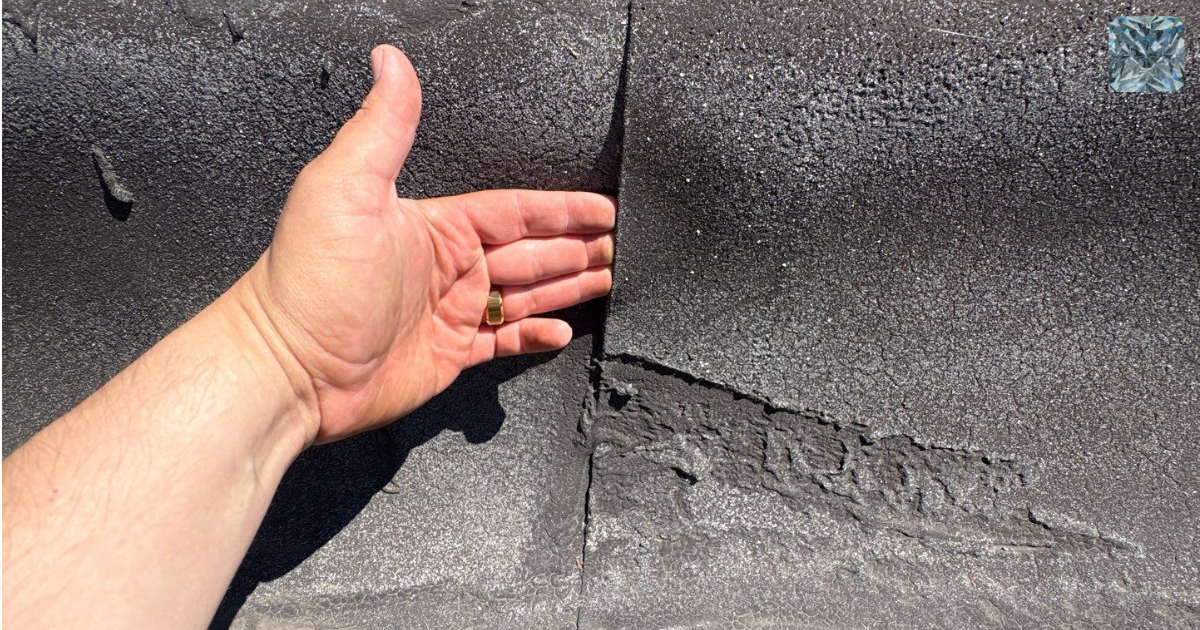
There is a right way to patch a flat roof. Most patches are not done that way.
The wrong way is fast. Scrape the surface, run a bead of caulk, press down a piece of flashing tape or pour-grade sealant, and call it done. Many landlords have seen exactly this repair done on their building. It works for a season, sometimes two. Then the caulk cracks, the tape lifts at the edges, and water finds its way back under, often several feet from where the original repair was made, because water does not travel in straight lines.
The right way takes longer. It involves cleaning the repair area thoroughly, applying a bonding primer so the patch has something to adhere to, embedding reinforcement fabric into the repair material, and top-coating with a product the manufacturer will actually stand behind. That last step matters more than most people realize. A patch applied without reinforcement or primer is, technically, not a warranted repair under most manufacturer specifications, which means the warranty clock on the rest of your membrane may still be running, but the patch is operating outside it.

If you are not sure which kind of patches are on your building, that is the first question to ask during a second-opinion inspection. The answer will tell you quite a bit about what the next five years look like.
The Roof Questions Every Landlord Should Be Asking. But Nobody's Answering Until Now.
Here's what a second opinion actually turns up.
1. Why should I get a second opinion on my roof if I already trust my roofer?
Even honest, skilled roofers sell what they're certified to install. If your roofer isn't trained in liquid-applied coating systems, he simply won't mention them, not out of dishonesty, but because it's not in his toolkit. A second opinion gives you the full picture.
2. What's wrong with my rubber (EPDM) or plastic (TPO) roof?
Nothing is inherently wrong with them, they were solid solutions for their time. But many of these systems are now well past their designed service life, and newer liquid-applied alternatives often perform better and cost significantly less to restore than to replace.
3. What is a liquid-applied coating system and how does it work?
It's a seamless, multi-layer system applied directly over your existing membrane, base coat, reinforcement mesh, then top coat. It extends the life of what's already up there without a tear-off, dumpster, or major disruption to your tenants or operations.
4. How much can I actually save with restoration versus a full tear-off?
On a typical 10,000 sq ft building, restoration runs $2–7 per square foot, the same range as a full tear-off. The savings come over the life of the roof, potentially $60,000–$130,000 when you factor in avoided landfill costs, labor, and disruption.
5. Why hasn't my roofer mentioned liquid coatings before?
Most likely because he isn't certified to install them. Systems like Conklin require specific training, certification, and materials. There's no incentive to recommend something you can't sell. It's a knowledge gap, not a character flaw.
6. How do I know if the patches on my building were done correctly?
A proper patch involves surface cleaning, a bonding primer, embedded reinforcement fabric, and a manufacturer-approved top coat. Most patches skip several of these steps. If yours were done with caulk and flashing tape, they're likely operating outside the manufacturer's warranty, and may already be failing beneath the surface.
7. What does a second-opinion inspection actually involve, and what does it cost?
It's a walkthrough of your roof with an honest assessment of what's up there, how much life it has left, and what your options are. It costs nothing. You're under no obligation to do anything with the information, but you'll have it.
A second opinion costs nothing. Schedule one.
We're local. We're American-made. We'll walk your roof, give you an honest report, and you decide what to do with it. No pressure. Just information.
Call or text: (219) 529-1995 • PristineIndustrialRoofing.com • Serving Lake County, Porter County, and Southwest Michigan.
[Request a Free Second Opinion]
APPENDIX — TECHNICAL DETAILS (FOR THE LANDLORD WHO READS EVERYTHING)
[Appendix A: How liquid-applied coatings actually work — base coat, reinforcement layer, top coat]
[Appendix B: Cost-per-square-foot comparison over 20 years: tear-off vs. restoration vs. patch-forever]
[Appendix C: Conklin warranty terms in plain English]
[Appendix D: What a proper inspection report includes — and what to ask for]
Read other blog:

We Love Conversations
 SoHelpful@PristineIndustrialRoofing.com